
Crutches take your hands. MonoCrutch gives them back.
Stand Upright Naturally
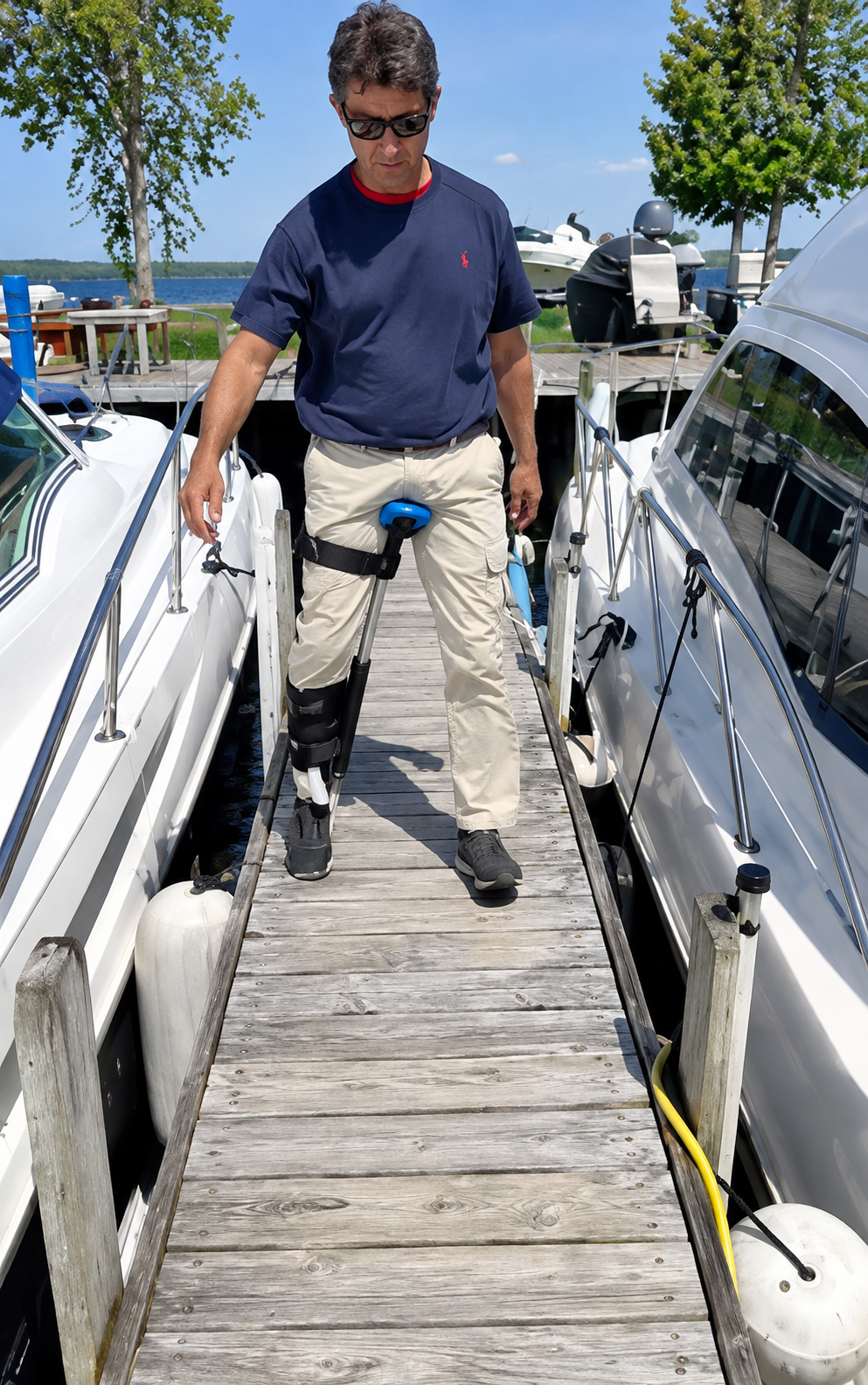
With your injured foot elevated and your weight supported by the crutch platform, you stand in a natural, upright posture — no hunching, no leaning.
Use Both Hands Freely
Your arms are completely free. Carry items, operate equipment, perform procedures, cook, serve — everything you need to do while recovering.
Built for People Who Can't Stop
MonoCrutch was designed for professionals and active individuals who need to stay on their feet — literally.
Chefs & Cooks
Prep, plate, and cook with both hands while staying upright at the stove. No more choosing between your recovery and your kitchen.
Surgeons & Medical Professionals
Perform procedures, assist in the OR, and maintain your clinical presence — MonoCrutch supports you without interfering with your work.
Lawyers & Professionals
Stand in the courtroom, address a jury, or present in the boardroom. MonoCrutch lets you maintain your professional presence without compromise.
About MonoCrutch
Invented by an Orthopedic Surgeon
Recovering from an injury or surgery can change the way you move through everyday life. Traditional crutches can help you stay mobile, but they also keep your hands occupied and ask your upper body to do much of the work.
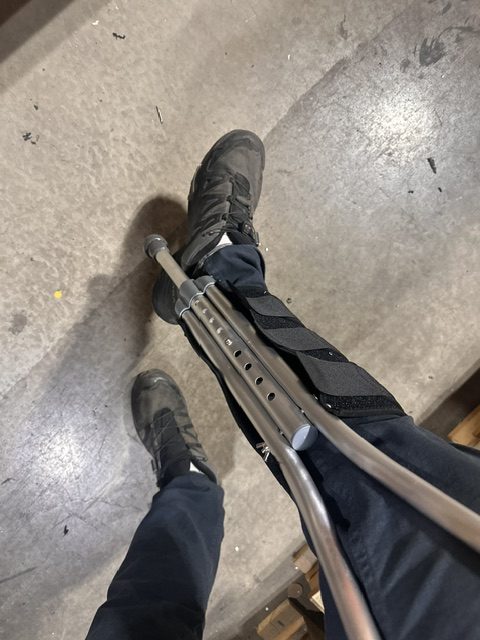
Everyday Freedom
Carry your coffee, prepare a meal, work, shop, or handle everyday tasks with greater ease.
Built for Recovery
Designed for people recovering from an injury or surgery who need to keep weight off a leg.
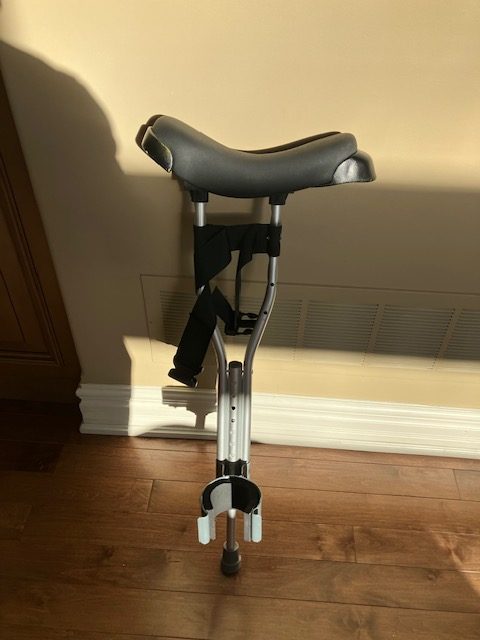
Why hands-free
Take back control of your life.
Mono Crutch re-directs load bearing forces through your pelvis and through Mono Crutch's light weight aluminum design. Leaving you without having to utilize your arms for weight distribution.
Stay Mobile. Stay Comfortable.
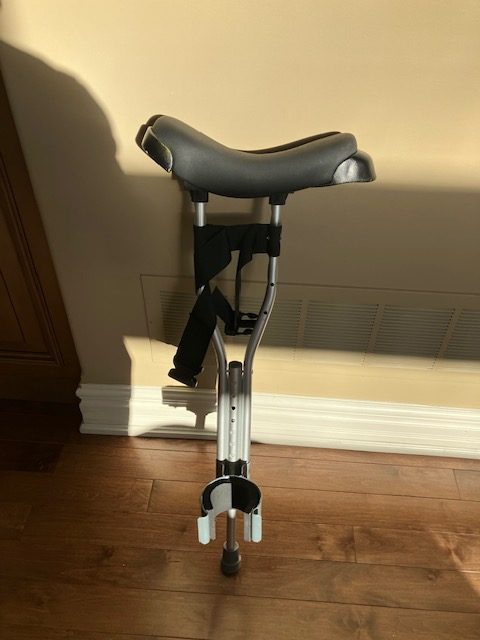
Because Mono Crutch only weighs 2 pounds (0.9kg), this makes it easy to move and walk with. Each Mono Crutch is designed with 8 inches of height adjustment settings, ensuring everyone can find their perfect fit.
The true Hands Free Crutch
Mono Crutch is patented, the first of its kind, and already changing the lives of millions globally. Take your life back today.
Built for Every Body.
Mono Crutch is designed to move with your routine. Whether you’re at home, at work, or out exploring, it gives you the freedom you deserve. Your hands stay free, so you can do everything you want to do.
Standard crutches need both hands,
and your upper body does the walking.
Your hands are taken
Carrying a drink, opening a door or holding a rail means stopping and setting something down first.
Your arms carry the load
Underarm and elbow crutches ask your upper body to support you with every step.
Small jobs become projects
Making a meal, answering a call or bringing in the post all need planning
Simple to understand.
Made for recovery.
Get the go-ahead
Your doctor or physiotherapist confirms MonoCrutch suits your injury and your recovery plan.
Put it on
Fit it to your leg and adjust it until it feels secure and comfortable.
Keep moving
Walk with both hands free and get back to the things you'd normally do.
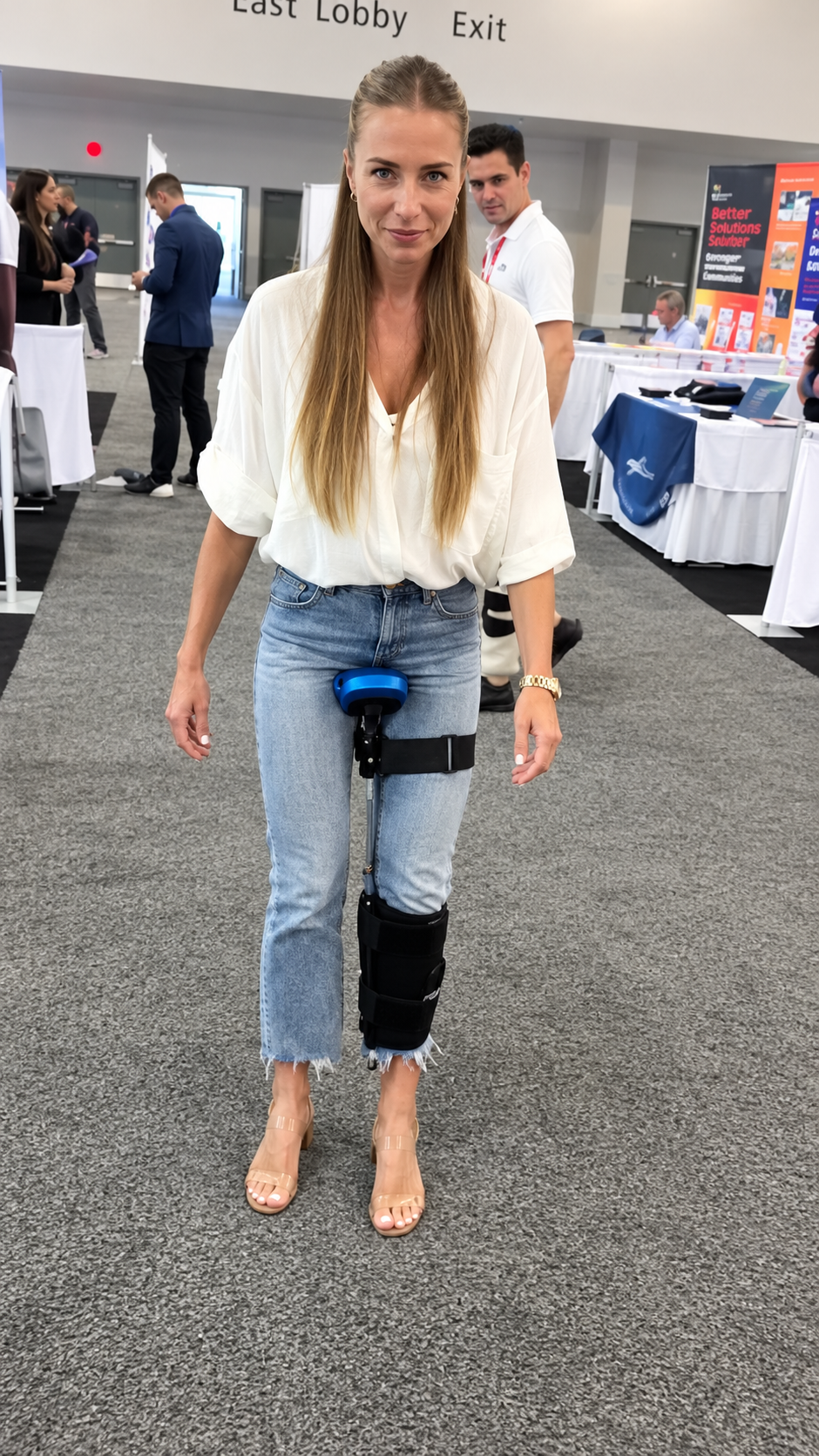
Made for people who need to stay off a leg and still stay active.
Recovering from injury or surgery
If you've been told not to put weight on a leg, MonoCrutch lets you get around without relying on underarm or elbow crutches, so your arms and hands stay available for everything else.
Easing the load while standing
Some people use MonoCrutch to take part of the weight off their legs while they stand. Ask your clinician whether that's right for you.
Let’s Talk About
Your Recovery
Have questions about MonoCrutch, how it works, or whether it may be right for your recovery? Get in touch with our team.
Frequently Asked Questions
Build the confidence and practical skills needed to succeed in today’s competitive workplace. From interview preparation to career development strategies, these lessons are designed to help you make a lasting impression and unlock new professional opportunities.
Why Choose Mono Crutch?
Mono Crutch, is different than regular conventional crutches. It works on the principle of carrying the weight through your pelvis rather than your armpits, elbows or forearm. Very similar to the principle of riding a bicycle. It allows you to walk almost completely hands free.
The most important part of using this type of crutch, is to use it going slow, using safe steps, trying to carry the weight on your pelvis, leaving the affected extremity protected from weight bearing.
Who Can Use Mono Crutch?
This type of crutch is designed for the active, well balanced patient in mind, with injuries to the lower extremities from the hip joint to the foot. It is designed for patients with fractures of the lower extremities, recent surgery including ACL reconstructions, torn meniscus, Achilles tendon repairs, tendinitis, hip or knee replacements, ankle replacements, foot reconstruction, etc.
This crutch is ideal for patients with trauma of the upper and lower extremities at the same time as they will be unable to use conventional crutches, due to the nature of the trauma on upper limbs.
The crutch can be used also in pediatric populations in children older than 6 years old. The fact that children are familiar with bicycles make the teaching to use them quite easily. It is recommended that children must have a good balance and understanding of the crutch. It is not recommended with children with severe palsies or cognitive disabilities.
Who Can Not Use Mono Crutch?
As mention above, good balance and good cognitive status, makes this crutch almost good for any age. It is not recommended for older individuals with poor balance issues, post severe strokes, dementia, problems with neurological diseases that make conventional walking awkward.
How Much Weight Can I Bear With Mono Crutch?
How much weight in your affected limb you can carry depend of the type of injury you have and the recommendations of your doctor. This crutch is designed for patients to walk none weight bearing to partial weight bearing all the way to weight bearing as tolerated. The person using this crutch will learn to use the weight of their body on the pelvis rather that the leg, in none weight bearing recommendations and a combination of pelvis and lower limb in situations were partial or full weight bearing is tolerated is indicated.
How Is Mono Crutch Secured To The Leg?
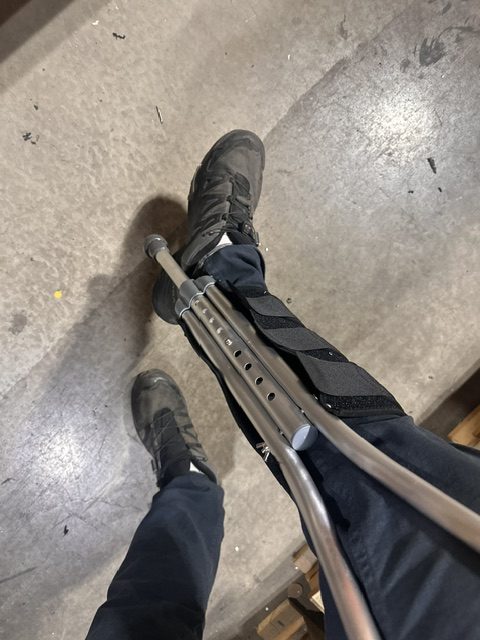
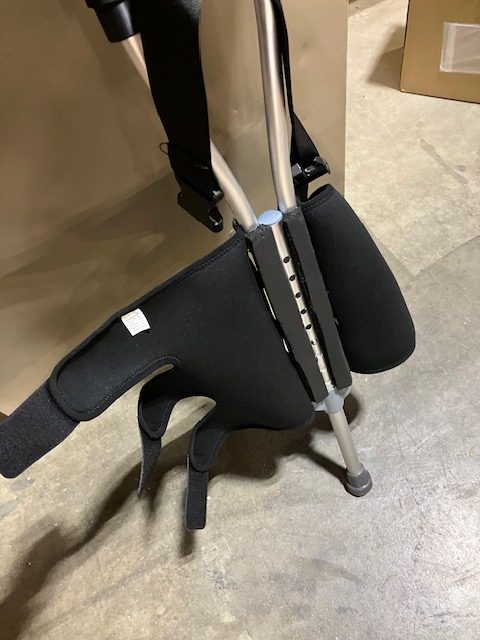
You must start by setting the length of the crutch, using the telescopic extender of the crutch. For non weight bearing patients, one inch longer than the distance between your groin and the heel, for partial and full weight bearing the same or almost even distance between the groin and heel distance. Once this setting is done, the patient should be seated in a bench, bed or regular seat, (we don’t recommend low sitting positions), secure the crutch to the calf using the calf neoprene wrap with Velcro straps snug to the crutch, then stand up and secure the saddle between your legs sitting like in a bicycle and then adjust the Velcro strap to your tight, again snug to the crutch.
Once you have the crutch like an extension of your affected limb, properly attached to your leg, you are ready to start walking. We recommend at the beginning to use the handle of the saddle to give you more confidence and balance and as you progress through the experience of walking with this crutch, you may walk hands free. Be aware that using your hand for extra balance is always an option to recover your balance or position.
Your step pattern should be slow, like regular crutches, using a simple arch or circumduction of your leg, what we call a “pirate” type of walking. You must be aware to clear the floor as your leg will be longer than usual.
How Can I make Mono Crutch More Comfortable?
The key is to have a snug fit of the crutch with your affected limb and good contact of the saddle with your crotch area. You can sit down with your leg extended, the crutch will remain by the side of your leg and stand up holding into the arm of the chair, other furniture, counters, etc.
How Can I Walk Up And Down Stairs?
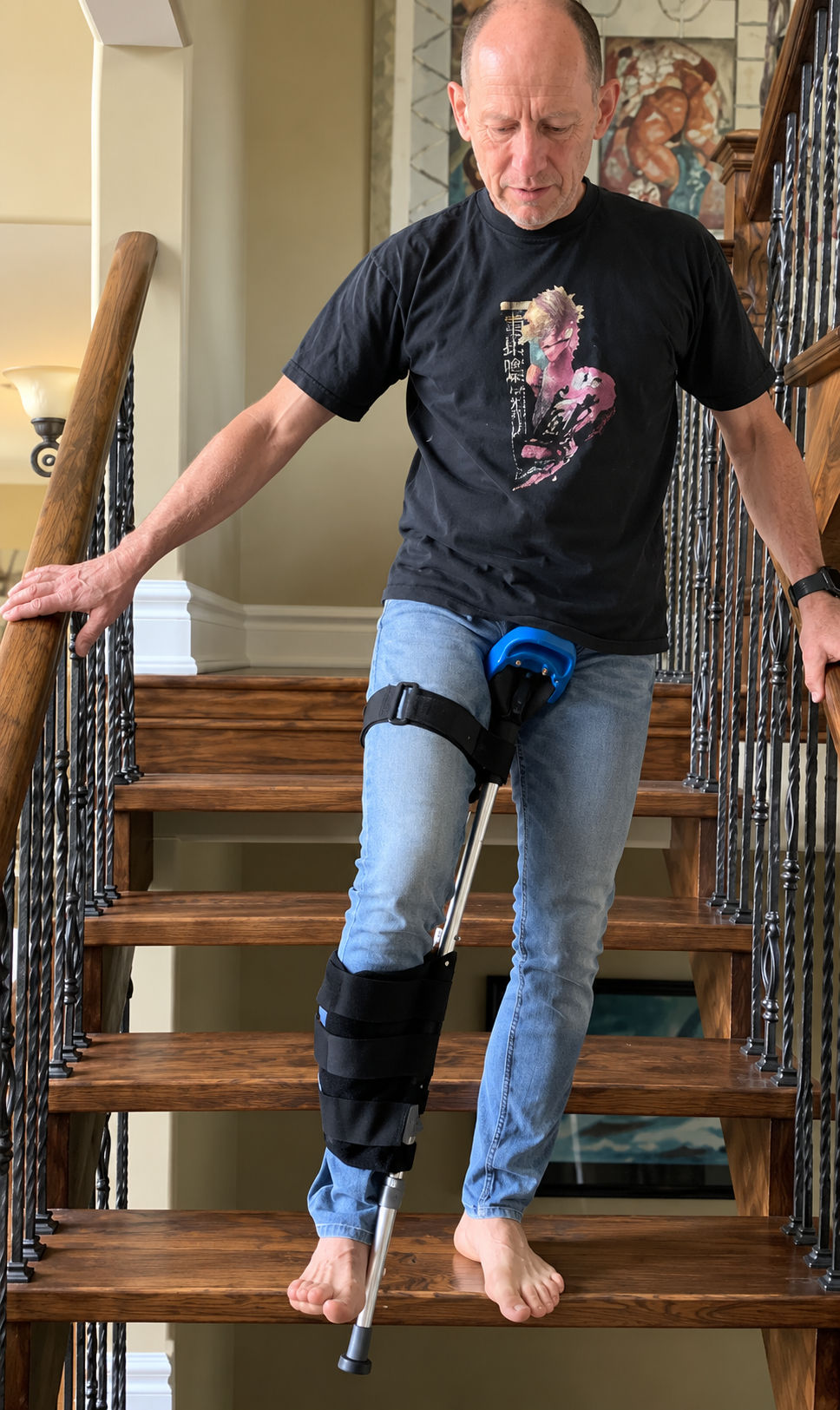
Walking on the stairs is easier than with conventional crutches. You still will use the hand rail at all times. Going up stairs, you will use your good leg to give the first step up and your affected leg will come after. You repeat the same steps until you reach the next floor.
Going down stairs is the same routine but backwards. You will use your affected leg to give the first step down and then your good leg matching the step down. Always with good support of the hand rail. Well trained walkers will find that with experience the up and down stairs can be done without the rail support.